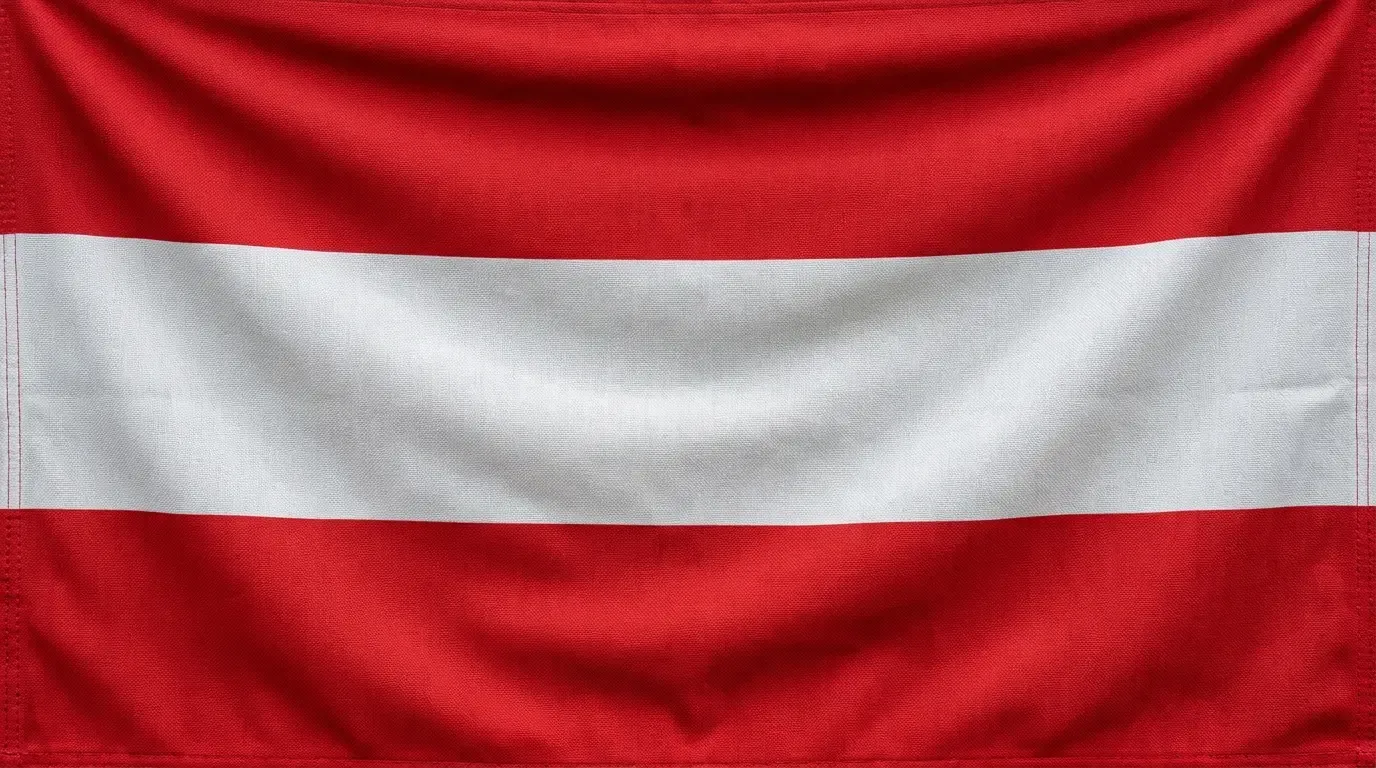
What to see in Austria: 12 must-sees
Discover what to see in Austria: 12 must-see destinations, from Vienna to Salzburg (Mozart's city). Predominantly UNESCO heritage and natural; each entry includes the best time to visit and the link to its official source.
UNESCO Heritage(4)
Stop at the Getreidegasse, the shopping street where Mozart was born in 1756, and climb up to Hohensalzburg Fortress (1077), the largest in Central Europe, towering 120 meters above the city. Founded in 696 as the seat of the archbishopric, Salzburg was an independent city-state for 1,100 years until its annexation to Austria in 1805. Visit the 17th-century Cathedral and the Mirabell (1713) and Hellbrunn (1619) palaces with their mechanical fountains. In July and August, the Salzburg Festival draws 150,000 spectators with opera, concerts, and theater beside the Salzach valley.
Sail through the valley where vineyards, castles, and monasteries line the 36 kilometers of the Danube between Krems and Melk, creating a cultural landscape that has inspired artists for 1,000 years. The Wachau's vineyards produce Austria's finest Grüner Veltliner and Riesling, while the castles of Dürnstein (where Richard the Lionheart was held prisoner in 1192), Aggstein, and Schönbühel keep watch over the river from their hills. Melk Abbey (1702-1736), the Benedictines' Baroque jewel that inspired Umberto Eco in 'The Name of the Rose', houses a 100,000-volume library and an imperial tomb. The villages of Dürnstein, Spitz, and Willendorf offer wine taverns where growers pour their vintages beside the river. In October, the Wachau Wine Festival turns the valley into a stage for tastings, music, and sampling, with every winery opening its doors.
Follow Sporgasse, the liveliest shopping street, to the heart of this city founded in 1128, once a Habsburg residence and now home to the largest historic center in Central Europe, with 700 listed buildings. Climb the Schlossberg, the 473-meter hill crowned by the 16th-century clock tower, and contrast the view of the red-tiled rooftops with the Kunsthaus Graz (2003), Peter Cook and Colin Fournier's "Friendly Alien." Visit the Church of St. Hilary (1447) and the Mausoleum of Emperor Ferdinand II (1637) amid alleyways of pastel facades and design shops.
Marvel at Austria's most spectacular Benedictine abbey, a 17th-century monastery immortalized by Umberto Eco in "The Name of the Rose," home to a library of 100,000 volumes, a baroque church 79 meters tall, and a cloister where monks walk among marble pilasters. Founded in 1089 by Leopold II, the abbey was rebuilt between 1702 and 1736 by Jakob Prandtauer in a baroque style that blends imperial majesty with Benedictine spirituality. The main church, with its frescoes by Paul Troger (1735) and its 9,783-pipe organ, is one of the largest in Austria, while the library holds 11th-century manuscripts and a collection of 18th-century globes. Walk through the upper cloister, where the monks still live by the Rule of St. Benedict, admire the view of the Danube from the terrace, and watch the abbey reflected in the river like a living postcard.
Natural(3)
Explore the alpine lake landscape where 76 turquoise lakes, 3,000-meter mountains, and wooden villages create a scenery that 'The Sound of Music' immortalized forever. The Hallstätter See, 8.5 km long and 128 meters deep, is home to the world's oldest salt mine (6,000 years), where miners extracted mountain salt before the Egyptians built the pyramids. Wander through Hallstatt, Austria's most photogenic village, where colorful houses pile up on the hillside like an accordion of wood and stone, admire St. Michael's Church with its cemetery of painted skulls, and head up to the Skywalk for views of the lake and mountains. Lake Wolfgang, the Traunsee with Orth Castle, and the Mondsee —the baptism in the film— round off a tour of the Salzkammergut where every lake has its own story and its own song.
Ride Austria's oldest cable car (1927), which ascends 1,800 meters to the panoramic platform of the Schmittenhöhe, at 2,000 m, with 360° views over the Salzburg Alps. Below, 4.6 km² of turquoise water spread across Lake Zell, ideal for boating, windsurfing, or swimming at 22°C in summer. In winter, ski on 130 km of slopes or on the permanent ice of the Kitzsteinhorn glacier (3,203 m). End the day in Zell am See or Kaprun amid alpine cuisine, crafts, and the region's liveliest nightlife.
Drive along Austria's most spectacular scenic road: 48 kilometers of curves, tunnels and viewpoints climbing from the Salzach valley to the Fuscher Törl (2,412 m), where the Pasterze Glacier, the longest in the Eastern Alps, spreads out at your feet. The Hochalpenstrasse, opened in 1935, was Franz Wallack's monumental project to prove that Austria could compete with Europe's great destinations. The viewpoints at Kaiser-Franz-Josef-Höhe (2,363 m), Pfannspitz and Fuscher Törl offer 180° views where the region's 360 glaciers fade before your eyes (they have shrunk by 60% since 1850). The Höhenweg Heritage Exhibition recreates the lives of 18th-century miners, while the Glockner pinnacle, at 3,798 meters, dominates the range. If you drive at dawn, you'll have the road almost to yourself, and the alpine light paints the glaciers pink and gold.
City(2)
Immerse yourself in the city of music, coffee and Sacher cake, where the State Opera, Schönbrunn Palace and the downtown cafés create an atmosphere of imperial elegance that has endured 800 years. Founded as the Roman fortress of Vindobona in the 1st century AD, Vienna was the capital of the Habsburg Empire for 640 years (1278-1918), ruling a territory that stretched from the Carpathians to the Pyrenees. Walk the Ringstraße, where the Opera (1869), the Parliament (1883), the Rathaus (1883) and the Burgtheater (1888) create a loop of historicist architecture; admire the 13th-century St. Stephen's Cathedral with its roof of 230,000 tiles; and get lost in the alleys of the Old Town, where marble-and-glass cafés such as Café Central (1876) and the Sperl (1880) preserve the spirit of Schiele, Klimt and Freud. Schönbrunn Palace, the Habsburgs' summer residence with 1,441 rooms, offers baroque gardens, the maze and the Gloriette with views over the city, while the Hofburg houses the Imperial Treasury with its 21,000 pieces, including the crown of the Holy Roman Empire. Don't leave without trying the Sachertorte at the Hotel Sacher (1876) and watching the sunset over the Danube from Strandbar Herrmann.
Climb to the city where mountains rise 2,000 meters above the rooftops and Gothic bell towers sway beneath the alpine sky, creating a living postcard between stone and snow. Founded in 45 BC as a Roman market town, Innsbruck was the capital of the County of Tyrol and the seat of Maximilian I (1493-1519), Holy Roman Emperor. The Goldenes Dachl (Golden Roof, 1500), covered with 2,657 gilded copper tiles, dominates Maria Theresa Street, where 18th-century Baroque architecture mingles with the snow-capped peaks. Ride the funicular up to the Nordkettenbahn (2007, Zaha Hadid), where the observation deck at 2,334 meters offers 360° views of the Alps, the 15th-century Stadtturm, and the mountain chain that separates Austria from Italy. The Olympic Sliding Center in Calgary (1976) and the Bergisel ski jump, designed by Zaha Hadid in 2002, complete a city where winter sports and culture coexist in perfect harmony.
Intangible Heritage(1)
Step into Hallstatt, declared a UNESCO World Heritage Site in 1997, where salt has been mined for 6,000 years and colorful houses stack up the hillside above the Hallstätter See. Take the funicular up to the Skywalk viewpoint and watch the mountains reflected in the lake. Tour the salt mines, still in continuous operation, with tunnels where miners left marks on the walls back in the 4th century BC. Visit St. Michael's Church (15th century), at 586 meters, and the Charnel House, with 1,200 skulls painted with flowers and names — a 17th-century funerary tradition.
National Park(1)
Walk through the largest national park in the Alps, 1,856 km² of glaciers and waterfalls. The Großglockner, at 3,798 m, crowns a territory home to 10,000 mouflons, 2,000 marmots, and 10,000 ibex. Head to the Krimml Waterfalls, 380 meters high with five cascades—the tallest in Austria and the fifth in Europe—and see glaciers such as the Pasterze, retreating 15 meters a year. From the Krimmler Tauernhaus or the Fuscher Törl you'll enjoy 180° views over the Eastern Alps. The park brings together 10,000 plant species, 350 bird species, and 400 endemic insects, studied by UNESCO for 50 years.
Monument(1)
Climb to the ruins of the 12th-century castle where Richard the Lionheart spent 14 months as a prisoner in 1192, while his brother John negotiated his release with Emperor Henry VI. Walk the walls and the keep, with views over the Danube and the vineyards of the Wachau, the region that Romantic painters called their pearl. Below, the village awaits with pastel-colored houses and the blue tower of the 15th-century Church of St. Nicholas. End the day with a glass of local wine at a traditional winery and watch the sunset from the castle viewpoint.
New destinations and itineraries, by email
Subscribe to receive newly published destinations and itineraries, plus seasonal travel ideas. One email, only when there is news.
Anything to correct or add about Austria?
If you have spotted incorrect or outdated information, or want to suggest additional details about destinations in Austria, leave us your comment. We review every one personally.